
2026 European Summit Key Takeaways
This collection brings together session briefs from the 2026 European Site Solutions Summit, authored by the site leaders, CRO partners, sponsors, and SCRS team members who were in the room. From geographic access challenges to hidden trial costs, these summaries reflect the conversations that mattered most. We hope this serves as a lasting and practical resource long after the summit wraps.
Toggle Custom CSS
Cross-Border Trials: EUCTR Advantage | Karri Venn, SCRS
Cross-Border Trials: EUCTR Advantage
To strengthen EU clinical trial competitiveness and patient access, the session highlighted several operational priorities:
Submission Support: Ensure adequate resources, education, staffing, and materials to streamline trial start-up. Consider ease of translated material access.
Harmonization: Adopt a “One Country” mindset to reduce fragmentation and create predictable, consistent processes across the region. Need to focus on establishing cross border policies as it relates to patient care and healthcare coverage to allow for a greater competitive landscape for patient access and enrollment.
Predictable Timelines: Focus on reliability and consistent regional performance to enhance enrollment planning and competitiveness.
FPFV (First Patient First Visit) Post-Greenlight: Even if submissions take longer, faster and more predictable enrollment post-approval increases competitiveness to attract more trials to Europe.
Fairness in Enrollment: Consider enrollment caps within regions to ensure equitable access across sites. This truly will support partnership, trust, and access for all mentality.
Parallel Planning: Pre-plan operational steps during regulatory submissions, coordinating with site operations and investigators to optimize trial kick-off and site readiness.
These steps collectively improve trial feasibility, patient access, and overall efficiency in the EU clinical research landscape.

Karri Venn
VP Site Advocacy & Mentorship, SCRS
Europe’s Role In Advancing Global Patient Access | Katya Biggs, TrialMed
Europe’s Role In Advancing Global Patient Access
Session Overview
This session focused on how European clinical trial sites can play a stronger role in expanding global patient access, particularly for underrepresented and geographically distant populations. The discussion emphasized practical strategies—decentralized solutions, trust-building, regulatory navigation, and patient education—that sites can apply immediately to improve recruitment, retention, and inclusion.
Europe holds distinct advantages: strong public healthcare systems, a diverse and aging population, and growing infrastructure for decentralized research. Yet operational fragmentation, regulatory interpretation differences (including GDPR), and inconsistent investment in research organization remain barriers. The opportunity lies in leveraging Europe’s strengths while addressing structural and educational gaps.
Key Takeaways
- Europe offers structural advantages—but execution varies by country.
Europe’s largely universal healthcare systems create access pathways that can support broader patient inclusion compared to fully privatized systems. However, GDPR interpretation differs across countries, and regulatory timelines to initiate studies can be longer. Operational processes and site readiness vary significantly, impacting study start-up and recruitment. - Decentralized approaches are essential for inclusion.
Up to 70% of patients at some sites live more than two hours away. Travel burden is a major participation barrier. Decentralized services—home health visits, telemedicine, local lab integration—are critical tools for reaching rural and underserved patients. However, sites and PIs must trust and integrate these models effectively. - Financial imbalance affects site sustainability.
In some cases, sponsors allocate approximately 20% of recruitment budgets to U.S. efforts, and recruitment vendors may receive three times what sites are paid. Meanwhile, European sites still struggle to establish trials quickly. This highlights the need for stronger site positioning and negotiation around fair compensation and operational support. - Inclusion requires intentional design.
Demographic diversity does not happen automatically. Europe’s aging population and increasing urbanization create opportunity, but without deliberate outreach and inclusion-by-design strategies, underrepresented groups remain unreached. - Site readiness tools matter.
Assessments such as DSAT (Demographic Site Assessment Tool) can help evaluate a site’s operational maturity, particularly for decentralized components, and identify gaps before study launch.
Demographic Site Assessment Tool – DSAT | Society for Clinical Research Sites
Actionable Recommendations for Sites
- Build inclusion into your recruitment strategy from day one.
Map your local population. Identify underserved groups (rural, elderly, minority communities). Partner with local clinics, primary care networks, and community organizations to extend outreach beyond traditional referral channels. - Normalize decentralized options.
Offer tele-visits where protocol allows. Establish relationships with home health providers. Create clear SOPs for remote monitoring and patient support. Proactively explain decentralized options to sponsors during feasibility discussions to position your site as access-oriented. - Educate your community continuously.
Unlike in the U.S., where clinical trials are widely advertised, many European patients are unaware of participation options. Conduct educational sessions in schools, patient associations, and community centers. Create simple materials explaining what clinical trials are and how patients can exercise choice. - Reduce practical participation barriers.
Ensure patients understand reimbursement policies. Since patient reimbursement has become more widely accepted, use it effectively to address transport, lodging, and basic needs which can often prevent participation more than lack of interest. - Build trust internally and externally.
Educate investigators and staff about decentralized tools to reduce resistance. Engage patient advocacy groups where available, and where they are not established, explore how to involve patients directly in feedback discussions.
Looking Ahead
Increasing participation from underrepresented populations remains a major opportunity. Sites can advocate for simpler protocols, practical visit schedules, and patient-first design. Politicians and health systems across Europe are showing increased support for clinical research—sites should align with these initiatives.
Sharing best practices across countries will be critical. Europe’s diversity can be a strength if sites collaborate, exchange operational learnings, and collectively push for inclusion to remain at the forefront of study design and execution.
The path forward is practical: educate earlier, design inclusively, decentralize thoughtfully, and build trust consistently.
This Plenary session was part of the IncluDE program SCRS IncluDE Program: Research Reflecting All Communities | Society for Clinical Research Sites

Katya Biggs
Home Trial Services Clinical Project Manager, TrialMed
Expanding Trial Access: Bridging Geographic Barriers | Karri Venn, SCRS
Expanding Trial Access: Bridging Geographic Barriers
The session explored how geographic and structural barriers continue to limit equitable access to clinical trials across the EU. Trial activity remains concentrated in urban centers, resulting in rural underrepresentation and site saturation. Differences in national regulations, start-up timelines, insurance requirements, and legal frameworks further complicate site activation and, in some cases, exclude certain countries from participation.
Addressing these challenges requires a multi-faceted approach. Decentralized and hybrid trial models were highlighted as important enablers, leveraging telemedicine, remote visits, and flexible scheduling to reduce travel burden and associated costs. However, solutions must be inclusive and culturally fit-for-purpose, with non-digital options available for elderly or digitally excluded populations. Technology should be intuitive and supported by usability testing, governance clarity, and appropriate compliance planning.
Cross-border trial initiatives and mobile health services also offer opportunities to expand access, though regulatory and operational simplification is needed. Increasing trial visibility and better understanding local patient pathways—such as specialist versus GP referral routes—are essential to improving recruitment and representation.
ONE Change: Shift to a True Partnership Model with Sites
The most impactful change would be to move from a transactional approach to a genuine partnership model across sponsors, CROs, and sites.
- CROs should expand commercial networks to include rural and underrepresented sites and help sponsors move beyond over-reliance on saturated urban centers.
- Sites should be engaged early in protocol development, with their feedback shaping feasibility, recruitment strategies, and operational design.
- Sponsors should treat sites as strategic partners—delivering on commitments, resourcing appropriately, and recognizing that one size does not fit all from a geographic and cultural perspective.
This shift also requires a clearer understanding of how patients are recruited locally and ensuring sites receive adequate financial support, resources, and documentation to execute effectively.
By embedding early collaboration and shared accountability, stakeholders can improve feasibility, enhance geographic equity, and ultimately strengthen trial delivery and patient access across the EU.

Karri Venn
VP Site Advocacy & Mentorship, SCRS
Hidden Costs Of Conducting Clinical Research Trials Workshop | Michael Pierre, SCRS
Hidden Costs Of Conducting Clinical Research Trials Workshop
The session offered a comprehensive and pragmatic look at the operational realities that drive the true cost of conducting clinical trials at research sites. The session analyzed unreimbursed work that occurs at startup, closeout, and during the trial. These activities are rarely compensated unless sites actively incorporate them into their budgets or account for them in an alternative fashion. The main idea of the session is to identify and quantify unreimbursed activities undertaken by research sites when conducting a clinical trial.
The discussion also underscored the importance of building labor rates on actual billable capacity rather than the notional 2,080 hours work year. After accounting for PTO, holidays, sick time, and nonbillable responsibilities, coordinators realistically have approximately 1,465 billable hours annually, making appropriate multipliers essential to recover overhead and maintain financial sustainability rather than unintentionally subsidizing sponsor activities.
Overhead itself was addressed directly and framed as a standard, unavoidable component of operating a research site. Overhead includes rent, administrative salaries, utilities, insurance, IT systems, and other infrastructure. European organizations formally classify these expenses into fixed, variable, and semi variable overhead, reinforcing that such costs are both legitimate and expected in any accurate clinical trial budget. The session also highlighted a wide range of tasks that should be billed as invoiceable line items but are frequently overlooked, including CTMS configuration, pharmacy and lab setup, regulatory updates, document storage, safety reporting, and remote monitoring support. These activities require staff time, specialized expertise, and operational resources, and therefore warrant explicit inclusion in budgets.
Fair Market Value (FMV) was discussed with clarification that FMV is a helpful benchmark and not a rigid limit. Sponsors may reference FMV during negotiations, but well-reasoned deviations are entirely appropriate when supported by time and effort data or documented operational needs. Sites were encouraged to present clear justifications rather than assume FMV ranges represent an upper ceiling.
The segment on payment terms emphasized the risks of contract language that ties site payment to the CRO’s receipt of funds from the sponsor. Without a direct and accountable payor, sites may struggle to recover owed payments despite delivering all required work. The presenters recommended negotiating monthly payment schedules and requesting sponsor guarantor status when necessary to ensure payment obligations are enforceable.
Looking ahead, the session acknowledged emerging pressures, particularly increasing technology demands, more extensive documentation requirements for cost justification, and heightened scrutiny around FMV. At the same time, more sites are beginning to decline studies that fail to support operational sustainability, a trend the presenters viewed as both necessary and positive for long term site viability. Overall, the session reinforced a clear message: accurately capturing and communicating the full scope of site responsibilities is essential not only for fair compensation, but for the continued ability of sites to operate effectively in an increasingly complex clinical research environment.

Michael Pierre
Project Manager, SCRS
KPIs That Drive Site Selection & Success | Jennifer Laws, Worldwide Clinical Trials
KPIs That Drive Site Selection & Success
Session Overview
This panel examined how sites, sponsors, and CROs use KPIs to guide site selection and drive study success, emphasizing that metrics are more meaningful when interpreted with context including operational realities, patient experience, and predictable delivery. While enrolment projections often get the most attention, the session reframed KPIs as tools for shared understanding rather than static scores, supporting more accurate feasibility, more reliable timelines, and stronger trial outcomes.
Key Takeaways
- FPI is the operational turning point
Sites and CROs agreed that FPI is a critical KPI. It’s the moment when theoretical feasibility meets real‑world execution and exposes challenges in eligibility interpretation, clinic workflow, and visit logistics.
- Recruitment KPIs require the “why,” not just the “what”
Screen failure rates and enrolment projections matter, but without context they can be misleading. Many sites don’t rely solely on patient databases and use blended recruitment approaches, referrals, outreach, social media, or community networks. One GP network site noted that they recruit primarily through social channels, yet questionnaire formats rarely accommodate this model, making their projections appear weaker than the reality.
- Predictability outweighs optimistic projections
Consistent, realistic delivery is highly valued. Sites that meet what they forecast build trust and are viewed as reliable partners.
- Retention KPIs are becoming more nuanced
Understanding when and why patients discontinue at site offers insight into protocol and/or standard of care alignment, site processes, and patient experience. While strong historical retention lowers perceived site risk, sites emphasized that retention is more than a metric, and not solely their responsibility. The panel agreed that effective retention requires patient informed protocol design and sufficient operational support from the outset.
- Patient experience underpins KPIs
Sites stressed that many KPI outcomes trace back to patient experience. Clear expectations, supportive staff interactions, and manageable visit burden influence recruitment, retention, and overall data quality more than any single metric.
Actionable Recommendations
- Ensure context behind recruitment projections
CROs and Sponsors should ensure feasibility questionnaires give sites the space to explain how they will achieve their projections, recognising that site profiles and recruitment models vary widely. Further, sites should add context e.g. historical performance and regional considerations, key barriers, or motivators, so their projections are more accurately interpreted and can support more reliable planning. - Strengthen pre-screening and early pipeline visibility
Extending pre-screening windows and documenting patient identification methods improve predictability. A warm pipeline allows sites to move more confidently from activation to recruitment. - Pair KPIs with root cause insights
Basic KPIs become more actionable when paired with the drivers behind them. For screen failures and dropouts, sites should note key causes e.g. eligibility misalignment, visit burden, logistical issues, and any planned mitigations. Even approximate categorisation helps distinguish protocol related challenges from operational ones and enables targeted support from Sponsors and CROs. - Build retention strategies into daily operations
Create consistent follow up processes, reinforce staff–patient relationships, and proactively flag visit window risks. Sponsors increasingly evaluate sites on retention discipline, making proactive approaches essential. - Communicate early and often
Raising issues before they escalate allows for timely adjustments. The panel shared an example where early site feedback prompted protocol changes that improved retention and compliance. - Use patient experience feedback—even informally
If formal exit surveys aren’t available, capture recurring themes from staff observations, visit burden, motivation, clarity of instructions, and use them to adjust workflows or escalate concerns.
Looking Ahead
Sites should prepare for:
- Providing more qualitative data in feasibility (narrative fields, rationales)
- Growing use of AI to analyse free‑text feasibility responses
- Increased emphasis on patient‑experience‑driven KPIs
- Earlier site engagement in protocol design to identify operational challenges before FPI

Jennifer Laws
Director Site ID, Worldwide Clinical Trials
Oncology Workshop | Sofie Vanderplaetsen, Thermo Fisher Scientific
Oncology Workshop
Session Overview
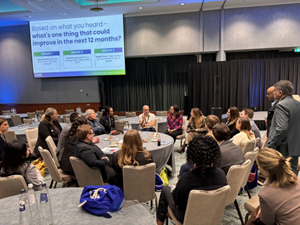
This workshop session brought together site, sponsor, CRO and service provider perspectives to explore the unique challenges and opportunities oncology trials present for research sites within Europe. The session saw strong participation, reflecting a clear enthusiasm in keeping a dedicated oncology discussion within the Summit program.
Key Takeaways
- Content Depth: Global Landscape data allowed attendees to reflect upon their own organizational best practices. Sharing perspectives and experiences from across the industry allowed for best practices to arise.
- Workshop Format: The smaller group discussions allowed open exchanges and was highly valued networking and learning time by attendees.
- Site Themes: Recurring priorities from oncology sites included reducing operational complexity and training burden, interest in pragmatic digital solutions like eConsent, and the need for reliable financial and partnership models.
Looking Ahead
There is strong and sustained interest in oncology as a focus area for site strategy. As sites continue navigating the operational and financial realities of these trials, this forum is well positioned to serve as a space where practical, cross-stakeholder solutions can take shape.


Sofie Vanderplaetsen
VP, Hematology Therapeutic Lead Hematology Oncology, Thermo Fisher Scientific
Pipeline Protection: Building Site Resilience | Silvina Baudino, Verdiva Bio
Pipeline Protection: Building Site Resilience
This session focused on analyzing market signals to anticipate pipeline disruptions and identify emerging therapeutic opportunities. It highlighted strategies for sites to adapt capabilities, diversify trial portfolios, mitigate risk, and build long-term resilience in response to changing sponsor priorities and market volatility.
Key takeaways
Diversification – Clinical trial indications and therapeutic areas move in waves. Sites must stay flexible and diversify capabilities to respond to market fluctuations and align with sponsor pipelines.
Timing – Early awareness of emerging trends allows sites to build the right infrastructure and capabilities before sponsors launch new clinical programs.
Staffing – One size does not fit all. Sites should plan staffing based on their size, type, and therapeutic focus. High-volume studies (like vaccines) can distort long-term staffing needs. Organic growth combined with strategic use of contractors can help manage temporary workload peaks.
Actionable Recommendations
• Network proactively. Build strong relationships with Sponsors, CROs, and other sites. Engage in conferences and online forums to stay informed about emerging trends.
• Promote your site. Register on clinical trial service platforms and databases to increase visibility for study opportunities.
• Stay open-minded. Market research, late-phase, and observational studies may seem less attractive but can lead to future early-phase trials.
• Be transparent. Feasibility surveys are your gateway to new trials—respond based on real capabilities and use comments to explain the context behind the numbers.

Silvina Baudino
Executive Director Clinical Site Strategy, Verdiva Bio
Therapeutic Area Expansion Strategies | Wes Bonner, DM Clinical
Therapeutic Area Expansion Strategies
Session Overview
This session explored when and how site networks should pivot from general medicine to specialized therapeutic areas. As the industry landscape changes and Sponsor/CRO pipelines evolve, sites must adapt to these new therapeutic states to remain competitive and aligned with market needs.
Key Takeaways
• Market Alignment: Sites must align their capabilities with current marketplace trends and Sponsor/CRO pipelines.
• Strategic Planning: Map out common pitfalls when pivoting to therapeutics and collaborate closely with Sponsors and CROs.
• Investigator Selection: Selecting the right Principal Investigator is crucial, as not every PI is suited for complex therapeutic trials.
• Intentional Expansion: Avoid expanding out of fear; make the transition only when it is strategically sound and the site has the necessary bandwidth.
• Performance Accountability: Success is measured by consistent delivery, as future opportunities depend heavily on the performance of the most recent trial.
• Building Trust: Establishing trust through consistency and predictability is the most effective way to secure therapeutic trial opportunities.
Actionable Recommendations
Sites should thoroughly assess their internal capabilities before pivoting to new therapeutic areas. Inexperienced or “naive” sites are most successful when they are part of a network that provides centralized support services. To secure opportunities, sites should focus on being predictable regarding regulatory timelines, study start-up, and enrollment. Additionally, embedded sites should leverage their direct access to patient flow as a primary competitive advantage.
Looking Ahead
There is significant ongoing discussion regarding how naive investigators and sites can gain access to specialized therapeutic trial opportunities. Furthermore, the impact of AI on qualifying for and securing these trials remains a key emerging trend to watch.

Wes Bonner
VP of Strategic Relationships, DM Clinical